What a Restaurant Gallery Actually Tells You: Reading Visual Evidence on the Meme 4D Menu
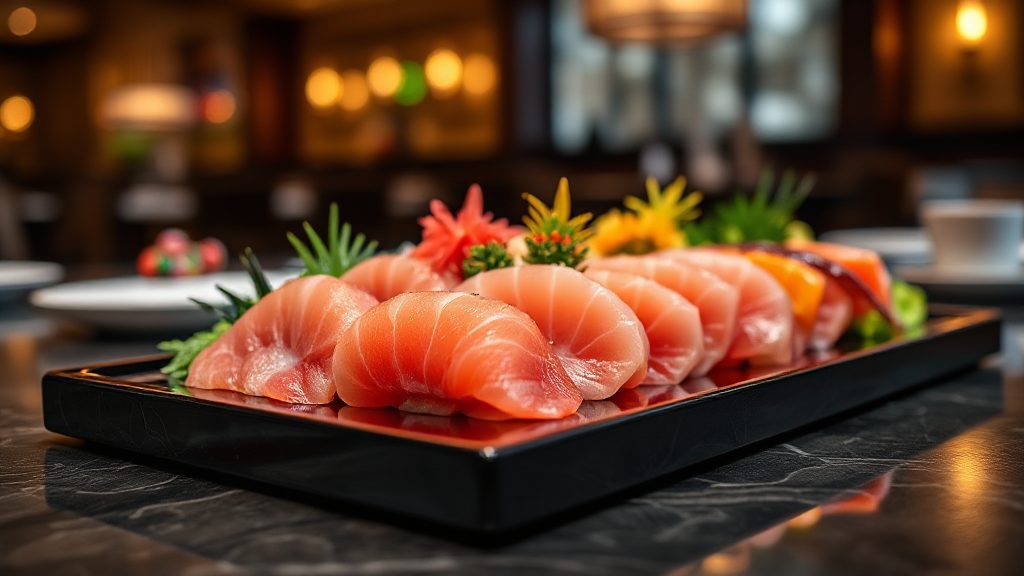
A single close-up of a sashimi platter can tell you more about a Japanese restaurant than a page of adjectives. When the camera sits close enough to reveal the grain of the cut, the sheen of the fish, and the clean line of the knife, you are not looking at decoration — you are looking at evidence. The meme 4d menu page and its surrounding gallery images work the same way: they answer the question a diner actually has, which is whether the kitchen can be trusted with raw fish.
That is the real search intent behind this topic. People are not hunting for a definition; they want to find a place, judge it quickly, and decide whether to book a table or order takeout. A gallery is the fastest honest answer a restaurant can give.
Why a Photo Beats a Paragraph of Claims
Every restaurant says it uses fresh fish. Almost none of them can prove it in text. A photograph, by contrast, is falsifiable — you can see whether the tuna looks dull, whether the rice is packed too tightly, whether the garnish is there to hide something.
For a Japanese restaurant in Richmond Hill serving authentic sushi and sashimi alongside a new type of sushi, the gallery is effectively the kitchen’s portfolio. It shows technique before you taste it.
What diners scan for in the first three seconds
Most people do not study a gallery; they absorb it. In those first seconds they register color, gloss, and order. Pale, matte fish reads as tired. Bright, moist flesh with visible texture reads as recently cut. A cluttered plate reads as rushed; a sparse one reads as confident.
Freshness is communicated visually before it is communicated verbally. That is why a strong gallery outperforms a long description of sourcing.
The credibility gap between text and image
Text claims are cheap to write and impossible to verify from a screen. Images carry risk for the restaurant, because a bad photo exposes a bad plate. When a gallery is consistent — same lighting, same plating discipline, same care across dozens of shots — it signals that the standard is routine rather than staged.
The Sashimi Close-Up: Reading the Cut
The most informative photo in any Japanese restaurant gallery is the tight sashimi shot. It is also the hardest to fake. A close crop forces the viewer to look at the surface of the fish, and the surface tells the story.
Texture, sheen, and the knife line
Look for a clean, slightly glossy face on each slice. A ragged edge suggests a dull blade or a hurried cut; a smooth, continuous line suggests a chef who sharpens and respects the fish. The fibers should be visible but not frayed.
Sheen matters too. Fresh sashimi has a natural moisture that catches light without looking wet or slick. If the fish looks dry at the edges, it has been sitting.
Plate composition as a freshness cue
Garnish is not neutral. A single shiso leaf, a mound of daikon, a wedge of lemon — each has a job. When those elements are placed with intent rather than scattered, it usually means the same care extends to the fish itself.
Restraint on the plate is a signal of confidence in the ingredient. Crowded plates often compensate for something.
Plating Shots and the New Type of Sushi
Galleries become more revealing when they show a restaurant’s less conventional work. A new type of sushi invites skepticism from purists, and the photos are where that argument is won or lost. If the innovation looks deliberate — balanced, clean, and photographed with the same respect as the classic pieces — it reads as craft rather than gimmick.
Consistency across the menu
Compare the traditional nigiri shot with the signature or modern rolls. Do they look like they came from the same kitchen? Consistent lighting and plating language across a gallery is one of the strongest trust signals a diner can find, because it suggests the whole menu is held to one standard.
Portion and proportion in the frame
Photography can flatter or distort. Watch the ratio of rice to topping, and the height of the piece. A roll photographed from directly above hides imbalance; a three-quarter angle reveals it. Good galleries show food the way it will actually arrive.
- Rice should look seasoned and distinct, not like a pressed block.
- Toppings should sit on the rice, not smother it.
- Sauces should be applied with a line or a dot, not poured.
The Dining Room and the Table Setting
A gallery is not only about food. Photos of the dining room answer a different set of questions: Is this a quick lunch counter or a place to sit for an hour? Is the lighting warm or clinical? Are the tables set for a reservation or for a queue?
For anyone planning a meal in Richmond Hill, these frames matter as much as the sushi. They tell you whether to bring a date, a client, or a group, and whether the room suits the price you are about to pay.
Atmosphere as a reservation decision
Table-setting shots — chopstick rests, folded napkins, a clean lacquer tray — quietly communicate service level. A restaurant that photographs its place settings is usually proud of them, and that pride tends to show up in how a reservation is handled.
What the room says about takeout
Counter space, packaging on a shelf, a tidy pickup area: these details appear in good galleries and answer the takeout question without a word. If the room looks organized, the order is likely to be organized too.
Chef and Kitchen Photos: The Human Evidence
The final category, and often the most persuasive, is the chef at work. Hands on a knife, a fillet being portioned, a tray being finished — these images show process rather than product, and process is harder to stage than a finished plate.
A kitchen that lets itself be photographed mid-service is telling you it has nothing to hide. That is a meaningful claim for a restaurant serving raw fish, where hygiene and handling are the whole game.
How to read a kitchen photo critically
Look at the background as much as the subject. Clean boards, organized stations, and visible gloves or towels are the details that separate a real working kitchen from a promotional set. A chef who is photographed concentrating on the cut — not smiling at the camera — is usually a chef who cares about the cut.
Process photos are the closest a gallery gets to a guarantee. They show the standard in motion, not just the result.
Putting the gallery to work before you book
The practical takeaway is simple. Before you reserve a table or place an order, spend two minutes in the gallery and compare it with the menu. Do the photos match the descriptions? Is the plating consistent? Does the room look like the experience you want tonight?
That short exercise replaces guesswork with observation. A gallery is not marketing filler — it is the most honest document a restaurant publishes, and the meme 4d menu is where that visual evidence meets the actual dishes you are choosing between. Read the photos the way you would read a menu: carefully, and with an eye for what is being shown rather than what is being promised.