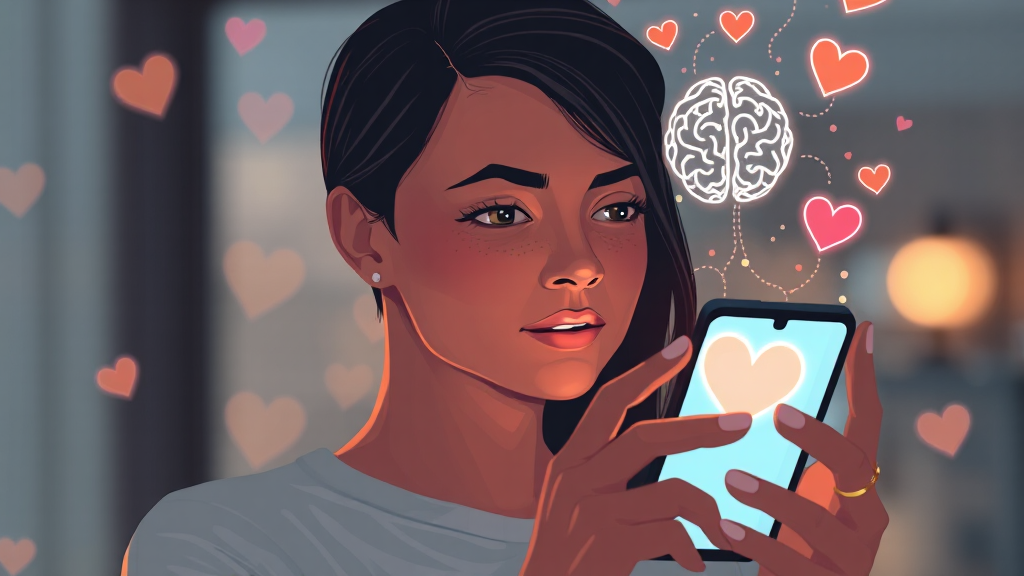
Why We Get a Crush On Someone: The Psychology and Technology Behind Attraction
Almost everyone knows the feeling: your heart races when a certain person walks into the room, your thoughts keep drifting back to them, and even a brief message from them can make your entire day. Having a crush on someone is one of the most universal human experiences, yet it remains surprisingly difficult to explain. Is it chemistry, timing, loneliness, or something deeper in the brain? In the digital age, the answer is becoming more layered, because the way we form crushes has changed along with the technology we use every day.
This article explores what a crush actually is, why our brains produce such intense feelings, how online platforms and AI companions have reshaped modern attraction, and how to handle a crush in a healthy way. Whether you are a teenager experiencing your first serious infatuation or an adult navigating complicated feelings, understanding the mechanics of a crush can help you enjoy it without losing yourself in it.
What Is a Crush, Exactly?
A crush is an intense but often temporary romantic or emotional attraction to another person. It usually involves idealization: you focus on the best qualities of the person and unconsciously fill in the gaps with your own fantasies. That is why a crush can feel so powerful even when you barely know the person. You are not in love with who they really are; you are in love with the version of them your imagination has constructed.
Crushes can be directed at someone you see every day, like a classmate or coworker, or at someone completely inaccessible, like a celebrity or an online creator. They can last a few days or several years. They can be thrilling, painful, motivating, or distracting, sometimes all at once. The common thread is that a crush produces a strong emotional pull that is difficult to ignore, even when logic tells you to move on.
The Neuroscience of Infatuation
From a biological perspective, a crush triggers a cocktail of chemicals in the brain. Dopamine, the neurotransmitter associated with reward and motivation, surges when you think about or interact with your crush. This is the same system involved in gambling and addiction, which explains why a crush can feel so compulsive. You keep checking your phone, replaying conversations, and imagining future scenarios because your brain is chasing that dopamine hit.
At the same time, levels of serotonin can drop, which is linked to obsessive thinking. This is why people with a crush often describe themselves as unable to stop thinking about the other person. Meanwhile, adrenaline and norepinephrine create the physical symptoms: sweaty palms, a racing heart, and that nervous flutter in your stomach. In many ways, a crush puts your body into a mild state of stress, but a pleasurable one.
Interestingly, the brain does not always distinguish between real romantic potential and imagined connection. This is one reason why parasocial relationships, where you feel close to someone you have never met, can produce genuine emotional responses. Your brain responds to the idea of a person just as strongly as it responds to the person themselves.
Why We Develop Crushes on Certain People
There is no single formula for who becomes the object of your affection, but psychologists have identified several common patterns. Proximity matters a great deal: you are far more likely to develop a crush on someone you see regularly, whether that is a colleague, a neighbor, or a frequent commenter in an online community. Familiarity breeds comfort, and comfort can easily slide into attraction.
Timing also plays a role. People are more likely to develop crushes during periods of transition, loneliness, or emotional vulnerability. A crush can act as a kind of emotional anchor, giving you something hopeful to focus on when life feels uncertain. This does not make the feeling fake; it simply means that your emotional state shapes how strongly you respond to someone.
Finally, there is the element of mystery. A person who is slightly out of reach, whether because they are unavailable, ambiguous, or simply hard to read, often becomes more attractive. The uncertainty keeps your brain engaged, because you are constantly trying to decode their feelings and intentions. In this sense, a crush is as much about the pursuit as it is about the person.
How Technology Has Changed the Way We Crush
Twenty years ago, a crush was mostly a private experience. You might write about it in a diary, talk to a friend, or simply daydream. Today, technology has made crushes more visible, more interactive, and in some cases more complicated. Social media allows you to follow your crush’s daily life in real time, which can intensify feelings of closeness even when no real relationship exists. You see their photos, their opinions, their humor, and their social circle, all curated for public consumption.
Dating apps have turned the early stages of attraction into a swipe, which can make crushes feel more disposable but also more addictive. The constant availability of new potential matches can create a cycle of short-lived infatuations rather than deep connections. At the same time, online communities allow people to bond over shared interests in ways that were previously impossible, and those bonds can quickly become romantic.
The rise of AI companions has added another dimension entirely. Platforms like crush on allow users to interact with AI characters that can simulate conversation, personality, and even emotional support. For some people, this becomes a space to explore feelings of attraction without the risks of rejection or judgment. It is not a replacement for human connection, but it does reflect how deeply our emotional lives have become intertwined with technology. A crush on an AI character may sound unusual, but the underlying psychology is familiar: we are drawn to attention, consistency, and the feeling of being understood.
The Difference Between a Crush and Love
Crushes and love are often confused, especially in the early stages of a relationship. The key difference is that a crush is built largely on fantasy, while love is built on reality. A crush thrives on mystery and idealization. Love requires knowledge of someone’s flaws, habits, and contradictions, and a willingness to accept them anyway.
A crush tends to be intense but unstable. It can disappear as quickly as it appeared, especially once you get to know the person better and discover that they are not the perfect figure you imagined. Love, by contrast, tends to be steadier and more resilient. It survives boredom, conflict, and ordinary days. That does not mean crushes are meaningless; they are often the doorway to something deeper. But it is important to recognize which stage you are in so you do not mistake infatuation for long-term compatibility.
Signs You Have a Crush (and What to Do About It)
Recognizing a crush is usually not difficult. Common signs include thinking about the person constantly, feeling nervous or excited around them, checking their social media more often than you would like to admit, and imagining conversations or scenarios that have not happened. You might also notice physical symptoms like a faster heartbeat, blushing, or a sudden inability to speak coherently.
Once you recognize the feeling, you have a few options. You can choose to act on it by starting a conversation, spending more time together, and seeing whether the connection is mutual. You can choose to enjoy the feeling privately without expecting anything in return. Or you can choose to step back if the crush is causing more anxiety than joy. The healthiest approach is usually to be honest with yourself about what you want and to avoid building an entire emotional world around someone who has not consented to be part of it.
Managing a Crush in a Healthy Way
Crushes can be wonderful, but they can also become obsessive if left unchecked. One useful strategy is to ground yourself in reality by focusing on what you actually know about the person rather than what you hope they are. Another is to maintain balance in your life: keep investing in friendships, hobbies, work, and personal goals so that your happiness does not depend on one person’s attention.
If your crush is on someone unavailable, or if the feelings are causing distress, it can help to talk to a trusted friend or therapist. Sometimes simply saying the feelings out loud reduces their power. And if your crush is on an AI companion or a public figure, it is worth asking yourself what need that connection is meeting. Loneliness, boredom, and a desire for validation are common drivers, and addressing those underlying needs can make the crush feel less overwhelming.
Frequently Asked Questions About Crushes
How long does a crush usually last?
There is no fixed timeline. Some crushes fade within a few weeks, while others can last for months or even years, especially if you continue to see the person regularly or if the feelings are never resolved. Crushes that are reinforced by frequent contact or social media exposure tend to last longer.
Can you have a crush on someone you have never met?
Yes. Parasocial crushes on celebrities, online creators, or even AI characters are common because the brain responds to perceived emotional connection, not just physical presence. These crushes can feel very real, even though the relationship is one-sided or simulated.
Is it normal to have a crush while in a relationship?
It is more common than many people admit. A crush does not automatically mean your relationship is failing. What matters is how you handle it. You can acknowledge the feeling without acting on it, and use it as a signal to reflect on what might be missing or what you appreciate in your current relationship.
How do you get over a crush that is not reciprocated?
Distance helps. Reduce contact, limit social media checking, and give yourself time to emotionally reset. Focus on other relationships and activities that make you feel valued. If the feelings persist and interfere with your daily life, talking to a counselor can be helpful.
Can a crush turn into real love?
Yes, but only when the fantasy gives way to reality. A crush becomes love when you get to know the person fully, accept their flaws, and choose to build something together. Many lasting relationships begin as crushes, but they require mutual effort and honesty to grow.
Final Thoughts
Having a crush is one of the most human experiences there is. It reveals what we long for, what we fear, and how powerfully our emotions can shape our attention. In a world where technology mediates so much of our social lives, crushes can form faster and feel more intense than ever before. Whether your feelings are directed at a coworker, a stranger online, or an AI companion, the key is to stay curious about yourself and honest about what you really want. Enjoy the butterflies, but do not let them carry you away from the rest of your life.